Living in an apartment block does not exclude life with a cat at all. On the contrary. A well-chosen breed can perfectly fit into the guardian’s daily rhythm, even if the living space is modest and the neighbors behind the wall have sensitive ears.
Choosing a cat for an apartment is, however, a decision for many years, and it should take into account the animal’s temperament, your lifestyle, and how much time you can devote to a relationship with your furry companion. This topic will be discussed in the article below.
Which cat breed is best for an apartment block — where should you start?
Instead of looking for one magical answer, it’s better to ask a different question: which cat temperament will feel comfortable in your everyday life. In an apartment, temperament matters more than the breed label itself.
A cat for an apartment block should tolerate limited space reasonably well, as well as sounds from the stairwell and the lack of free outdoor access. It’s not about being “lazy,” but about not needing daily garden marathons or becoming frustrated at every closed gate.
It is also important how the owner lives.
- Do you work from home and spend most of the day at home?
- Do you disappear from the apartment for 10 hours?
- Do you have children who bring a lot of energy into the home?
In practice, we are looking for a cat whose needs for movement, contact, and stimulation roughly meet halfway with what you are able to provide.
What kind of cat are you looking for in an apartment block — an energetic companion or a calm couch lover?
Before you call a breeder or a shelter, answer one honest question for yourself: what kind of cat do you really want for an apartment block? One that greets you at the door and demands playtime, or rather a feline roommate who happily cuddles on the couch but doesn’t initiate commotion.
Several typical owner profiles can be distinguished:
- You work from home
You have plenty of time for breaks and play during the day, and you can step away from your desk to throw a teaser wand or a ball. A more sociable cat works well here — one that enjoys being “in the center” and doesn’t feel lonely when you’re busy working, as long as you’re still at home.
- You are constantly on the go.
Leaving in the morning, returning in the evening, sometimes business trips. In such a case, a calmer, adult cat with a stable temperament will be a better choice. The breed matters, but even more important is whether the individual cat is not overly fearful or highly demanding.
- You have children.
Here, a patient and stable temperament matters most. The cat should not react with aggression to every louder sound. If you’re wondering which cat breed is a sensible choice for an apartment in this situation, look for breeds known for gentleness—but always combine that with educating children and teaching respect for the animal.
Which cat breed can stay alone in an apartment, and when is it a bad idea?
The truth is a bit disappointing. No cat breed actually “likes” loneliness. Some cats simply tolerate it better.
An adult, well-balanced cat accustomed to your routine will usually cope with a typical working day of its owner. A kitten that is just learning about the world, left alone for many hours every day, may feel stressed, bored, and may even become excessively anxious.
So if you’re asking which cat breed can stay alone in an apartment, it’s more worth looking at other factors:
- the cat’s age
- whether it has activities and places to climb and observe
- whether you are considering a second cat as a companion
- whether you have someone who can drop by and visit it from time to time
A bad idea is a situation where a cat spends most of its life alone, without contact, play, or stimulation. Even the calmest breed will sooner or later start to protest in some way. Damaged furniture, evening meowing, litter box problems — these are signals that something needs to change.
Is there an ideal cat breed for apartment living?
Short answer: no. Longer answer: there are breeds that more often adapt well to apartment living, but each comes with its own “but.”
A cat breed suitable for apartment living is usually one whose members:
- have a generally calm temperament
- they enjoy human contact
- do not require constant, very intense physical activity
Examples often include Ragdolls, British Shorthairs, and the Sacred Birman. However, this does not mean that every individual will be the same. Within a single breed, there can be significant differences between individual cats.
The Sacred Birman — why does it adapt so well to apartment living?
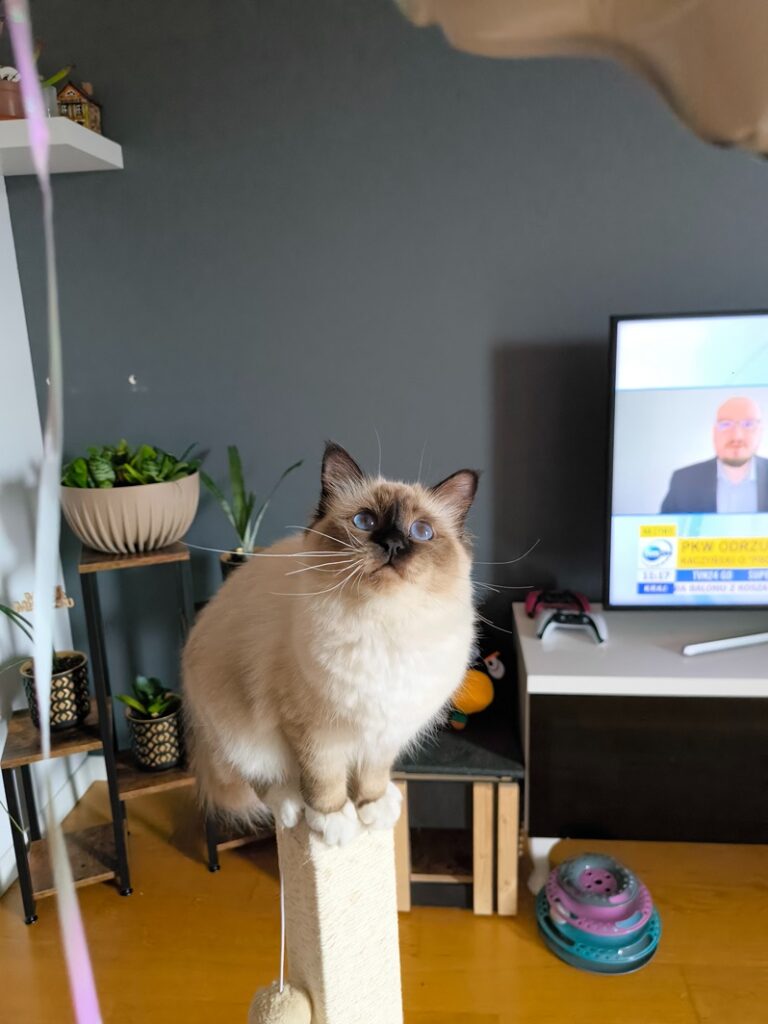
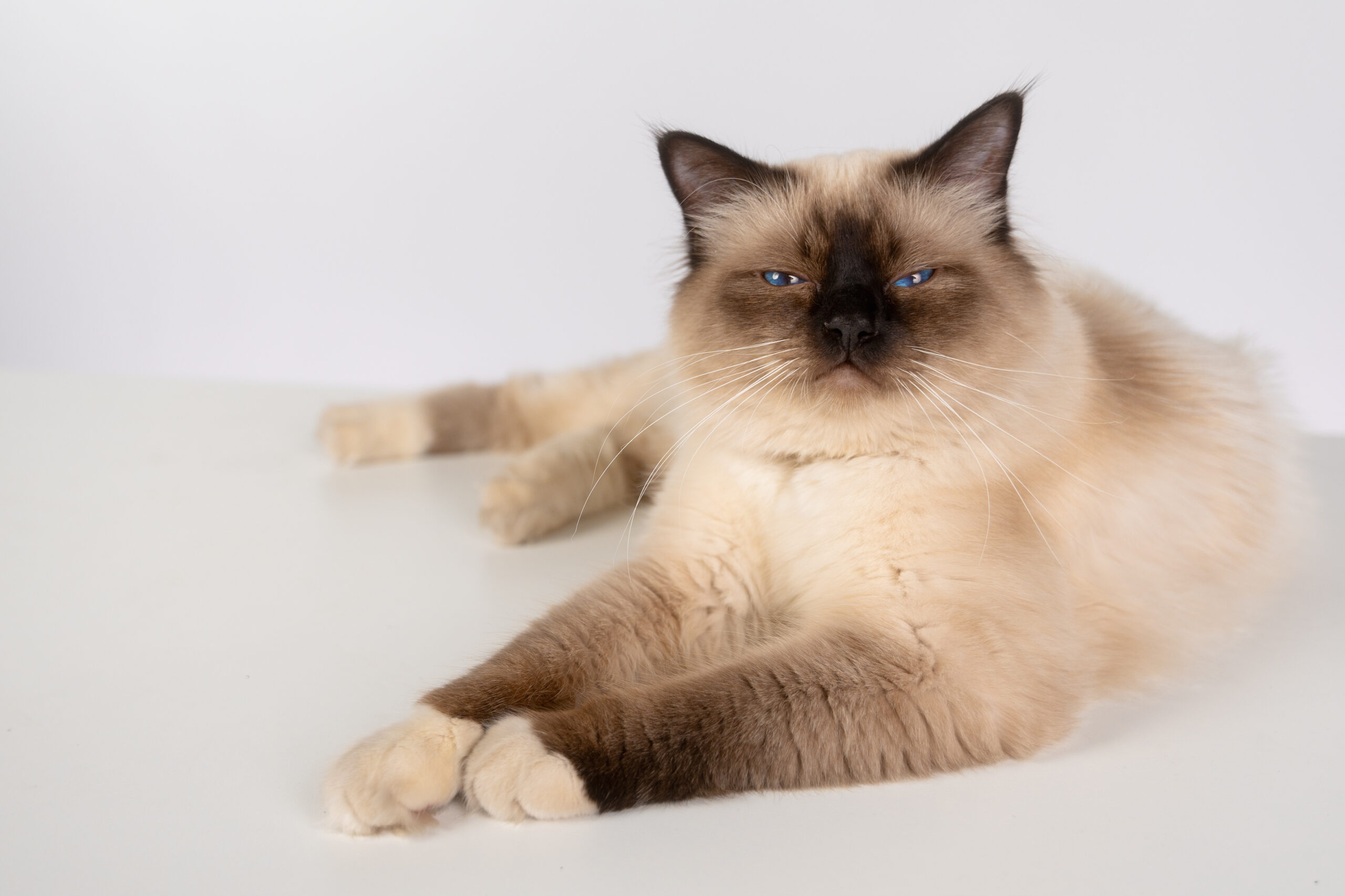
The Sacred Birman is a cat breed with semi-long fur, blue eyes, and a very friendly temperament. It is often called a “gentleman in a fur coat.” And there’s something to that.
Birmans are known for the fact that they:
- they like to stay close to people
- they are relatively calm, but enjoy playing with their owner
- they are generally not loud
- they do not require a garden to feel fulfilled
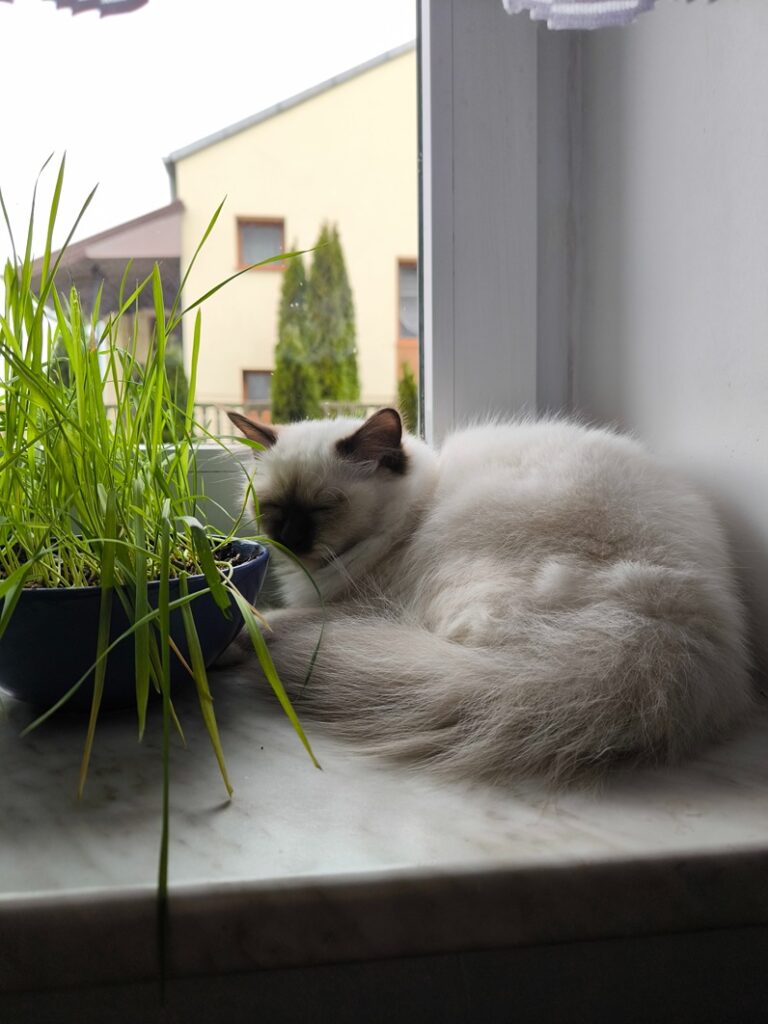
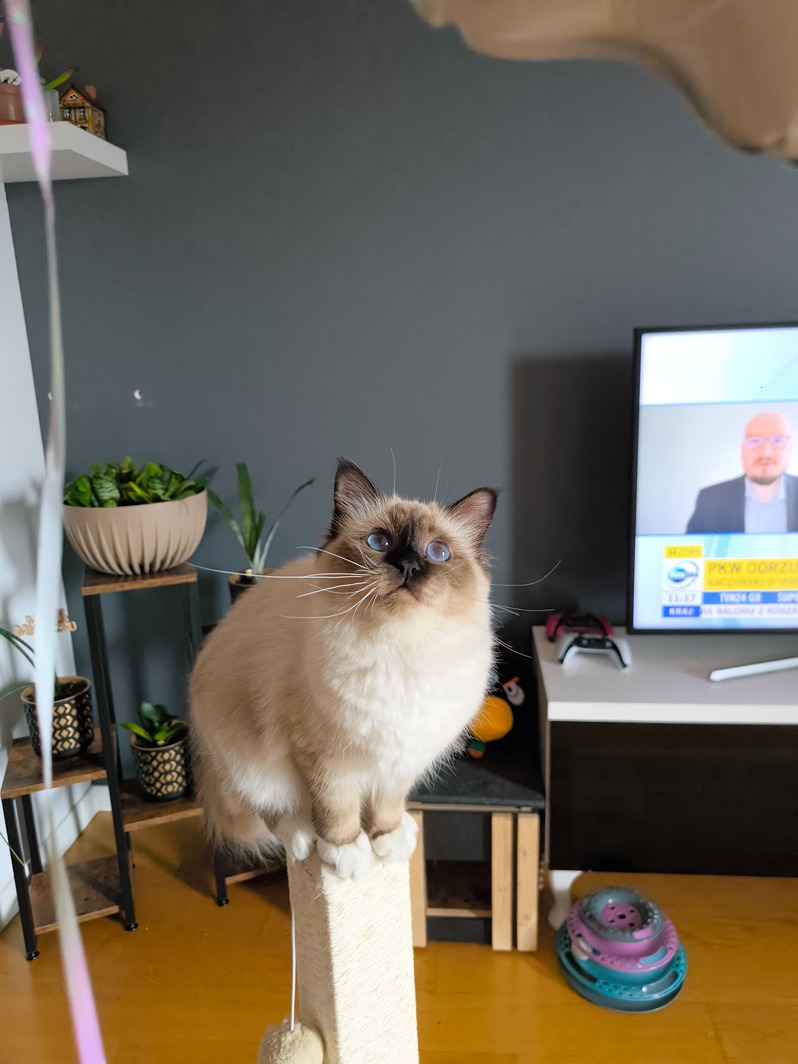
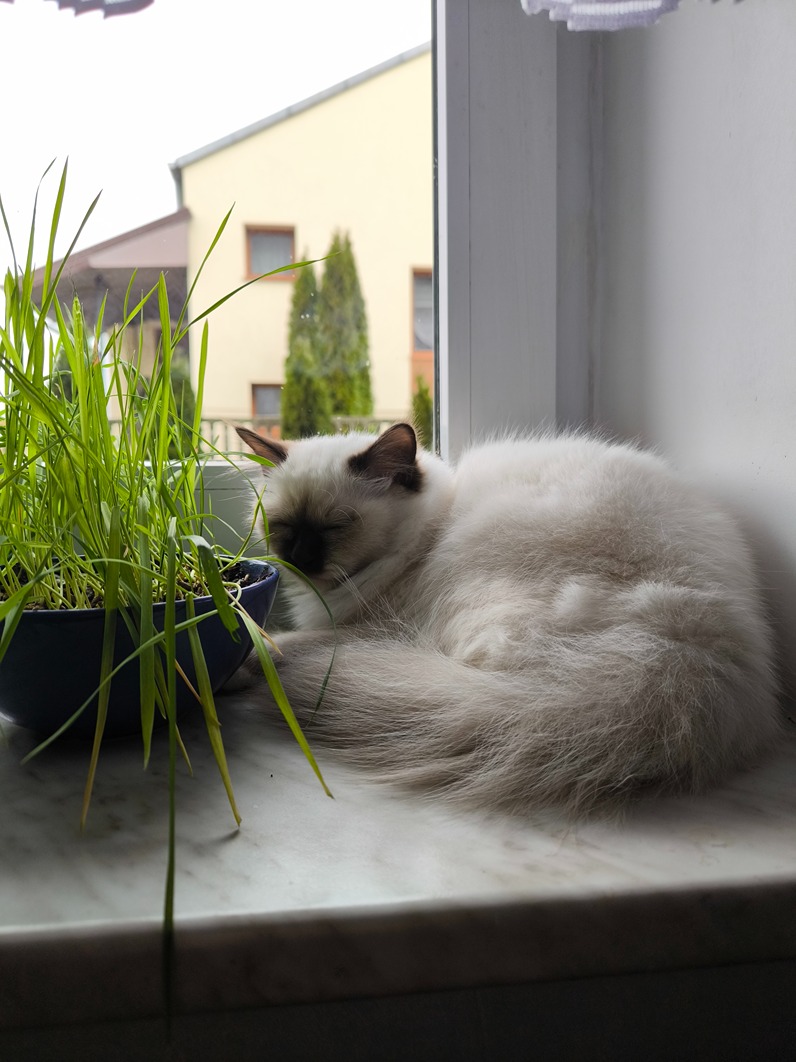
They adapt well to apartment living when they have a few key elements: a tall scratching post, a spot by the window where they can observe the world, and regular playtime with their human. These are very “home-oriented” cats that like to keep their family within sight.
What temperament does the Sacred Birman have, and is it suited to life in an apartment block?
The temperament of the Sacred Birman can be described in a few words: gentle, sociable, and stable. It is a cat that becomes very attached to people. It happily greets you at the door, comes to the couch, and often chooses to sleep where you are, rather than alone in another room.
Birmans usually:
- they are curious, but without wild bursts of energy
- they enjoy gentle, regular play
- they usually do not tend to loud, persistent meowing
- they adapt well to a stable routine
All of this makes them well suited to life in an apartment block. They do not need a huge amount of space, but they highly value human presence and a sense of security.
Can the Sacred Birman be left alone at home for a few hours?
In the case of this breed, the answer is yes — an adult, well-cared-for Sacred Birman will usually cope well with a typical working day of its owner.
However, it is worth meeting a few conditions:
- the cat should be an adult or at least past the most intense stage of maturation
- it needs a safe space, familiar routines, and regular feeding times
- before leaving, it’s a good idea to spend a moment playing with it, and after returning, give it another bit of attention
- for longer trips, a pet sitter or a trusted person who checks in on the cat works well
Sacred Birman cats do not cope well with a chronic lack of human contact. This is not a breed for someone who is only at home on rare occasions. However, if we are talking about eight hours at work and evenings spent with the cat, for most Birmans this will be a normal and safe routine.
When is the Sacred Birman not a good choice for apartment living?
There is no breed that is ideal for everyone. The Sacred Birman is also not the answer to every need. There are situations in which it is better to choose another breed or even postpone having a cat.
A Birman may not be a good choice when:
- you travel for work very often and have no one to take care of the cat
- you come home late every day and have no energy left for play and interaction
- you expect a “loner” cat that organizes its own time and does not need closeness
- you do not like regular grooming and brushing of the coat
- there is a lot of chaos, noise, and a lack of consistent rules at home
This is a relationship-oriented breed. If you want a cat that “is its own captain and helmsman,” the Sacred Birman may feel disappointed. And so might you.
FAQ — frequently asked questions about a cat for apartment living
Which cat should I choose for an apartment if I’m often not at home?
If you know that you are often away, look primarily for an adult, well-balanced cat. Ideally, one whose temperament is already known, for example from a foster home or a responsible breeder.
Important solutions:
- consider adopting two cats that get along well with each other
- provide high shelves, a scratching post, and interactive toys
- for longer trips, use the help of a pet sitter
In such a scenario, the breed is only part of the puzzle. More important is how a specific cat copes with being alone and how you plan its environment.
Is the Sacred Birman suitable for an apartment without a balcony?
Yes, a Birman cat can function well in an apartment without a balcony. A balcony can be an added attraction, but only with appropriate safety measures. However, it is not necessary for the cat to feel happy.
Much more important is that:
- it has access to a window and can observe the world from it
- it has several places to lie down at different heights
- it receives time from you for play and affection
Which cat breed can stay alone at home for 8 hours?
The question itself is specific, but the answer does not concern the breed alone. Eight hours is a typical workday, and most adult, healthy cats should cope with it — provided that the rest of the day is not spent in such isolation.
Usually, calmer breeds cope well, such as:
- Sacred Birman
- British Shorthair
- ragdoll
More important than the breed label is:
- preparing the environment (scratching posts, hiding spots, window, toys)
- maintaining a consistent daily routine
- providing interaction upon returning home
Does your lifestyle mean eight hours of work and active, affectionate afternoons with your cat? The Sacred Birman is an example of a breed that usually copes well with such a schedule.
Which cat should NOT be chosen as the first pet for an apartment?
Instead of pointing to specific breeds, it’s better to describe certain types that a person without experience should approach with caution. Choosing as your first cat in an apartment block may be difficult if you pick:
- an individual that is very energetic and needs lots of movement and stimulation
- a cat with a strong hunting instinct, which becomes frustrated by the lack of outdoor space
- a very loud cat that demands constant attention
This does not mean that such cats are “bad.” They will simply do better with an owner who already has experience and plenty of time to work with them.