Are you wondering which cats for allergy sufferers work best and whether it’s even possible to reconcile a sensitive immune system with the dream of a purring companion? This is a dilemma many people face. And yet, more and more often it turns out that allergies do not have to rule out plans and dreams. An increasing number of allergy sufferers discover that certain breeds can give them a chance for a comfortable life with a cat. Among them, Sacred Birman cats rank very highly.
Do cats for allergy sufferers even exist?
This is one of those questions that keeps coming back like a boomerang, especially when someone dreams of a cat and at the same time starts sneezing at the very thought of fur. It’s worth clarifying right away: there are no 100% hypoallergenic cats. Allergic reactions are caused by the Fel d 1 protein, which is found in saliva, skin, and secretions. Fur only “carries” it.
That doesn’t mean, however, that every cat will cause the same reaction in an allergy sufferer. Different breeds produce different amounts of allergens, and some are simply better tolerated. Some people react more mildly to long-haired breeds, while others do very well with short-haired cats. It’s a highly individual matter, so before considering which cat breed is best for allergy sufferers, it’s worth getting to know a few breeds that more often appear on lists of “safer” options.
Breeds considered more allergy-friendly
There is no single answer to the question of which cat breeds do not cause allergies in everyone. However, there are breeds that statistically trigger milder allergic reactions. The most frequently mentioned include:
1. Siberian cat
Many people report that they tolerate contact with this breed well. Siberian cats produce lower levels of Fel d 1, although this is not a rule.
2. Neva Masquerade
Similar to the Siberian, but with a more oriental appearance. It is often tolerated by people who react to other cats.
3. Sacred Birman cat
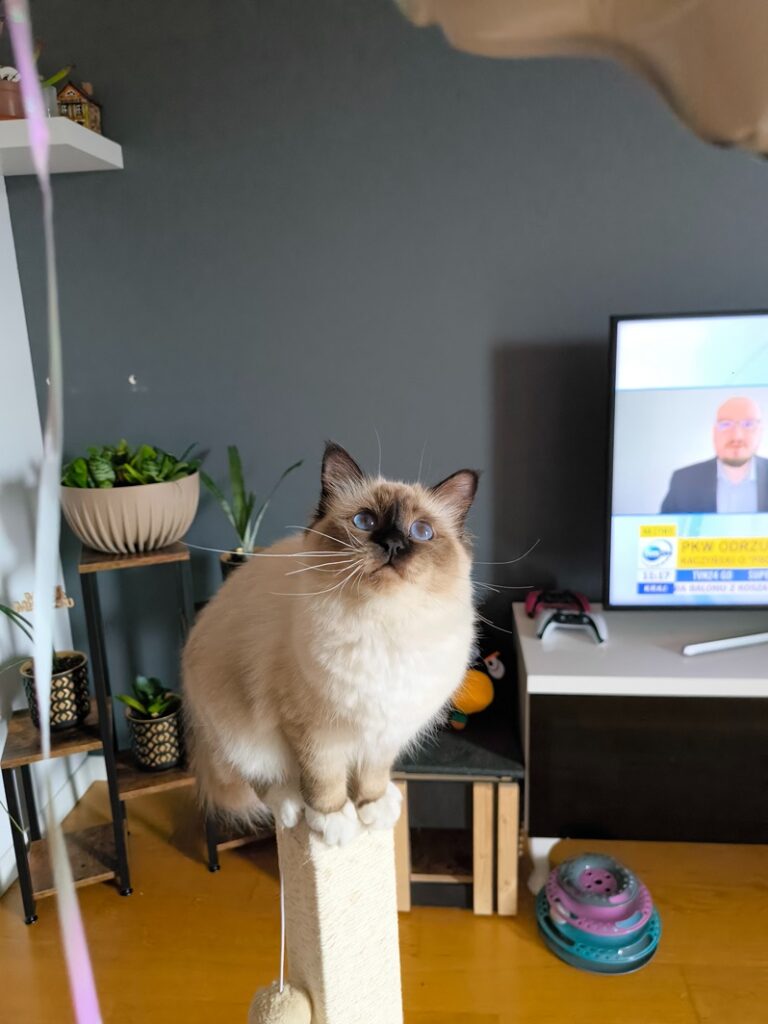
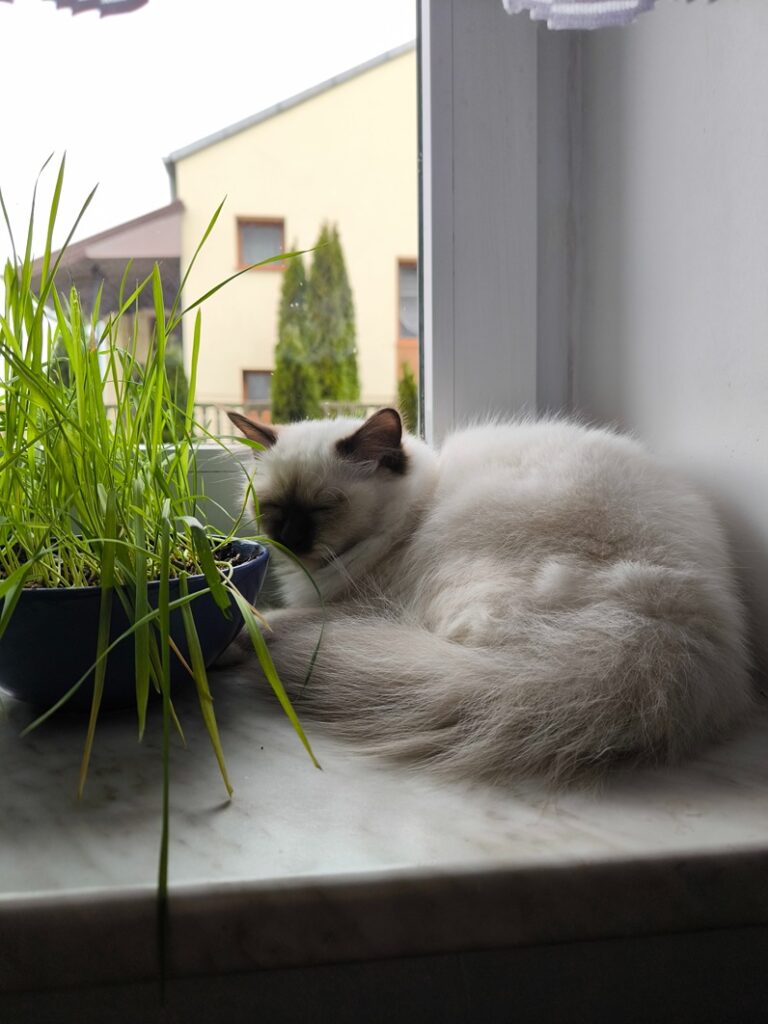
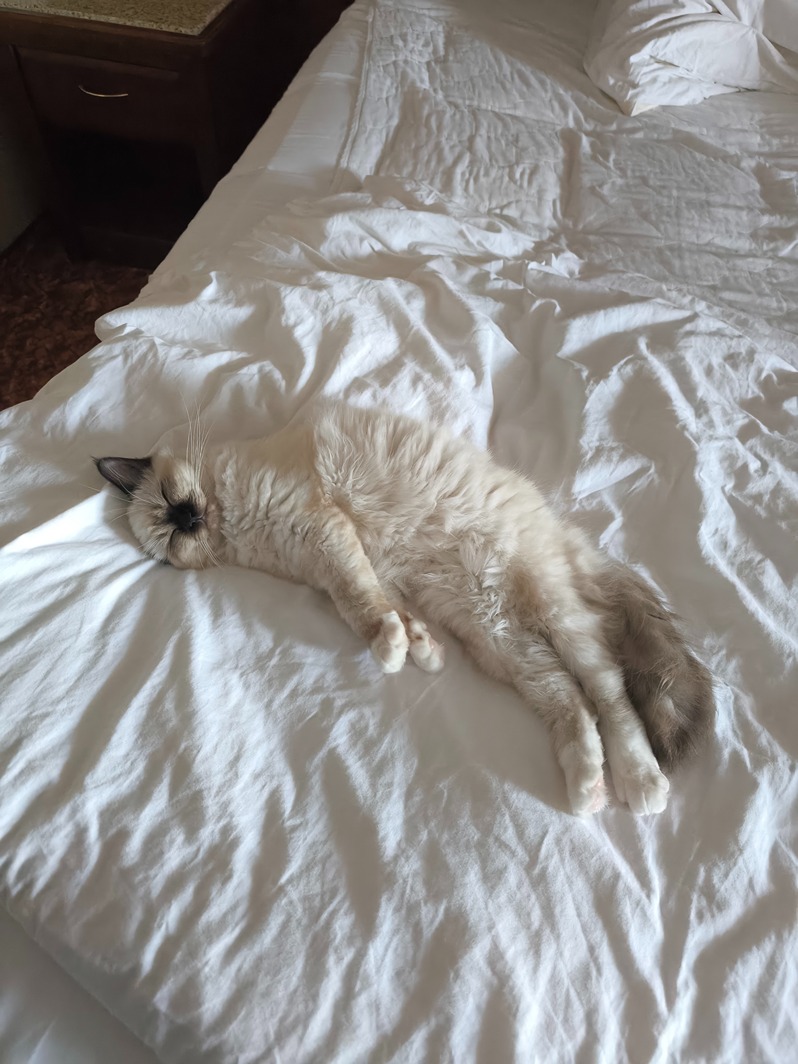
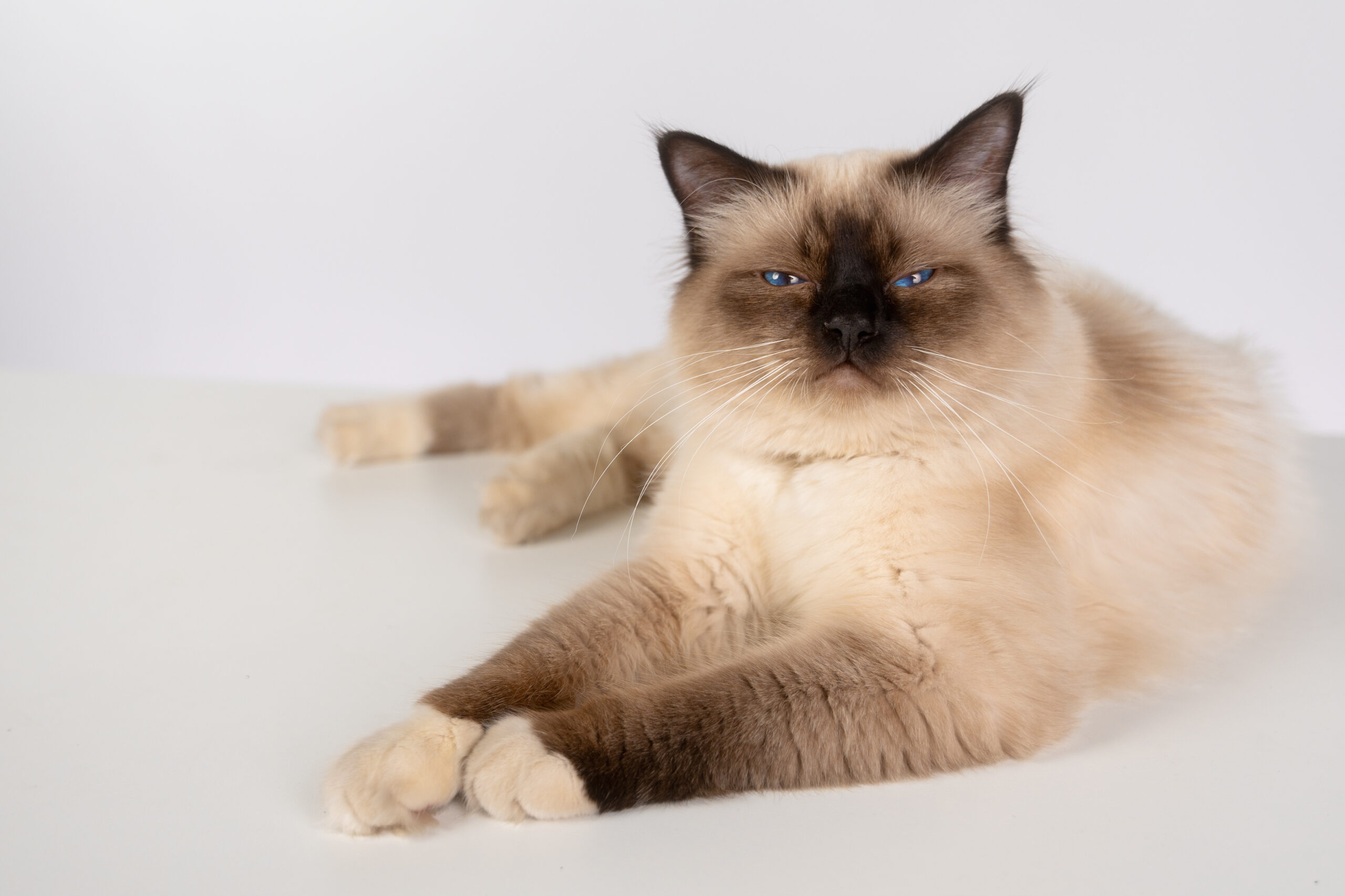
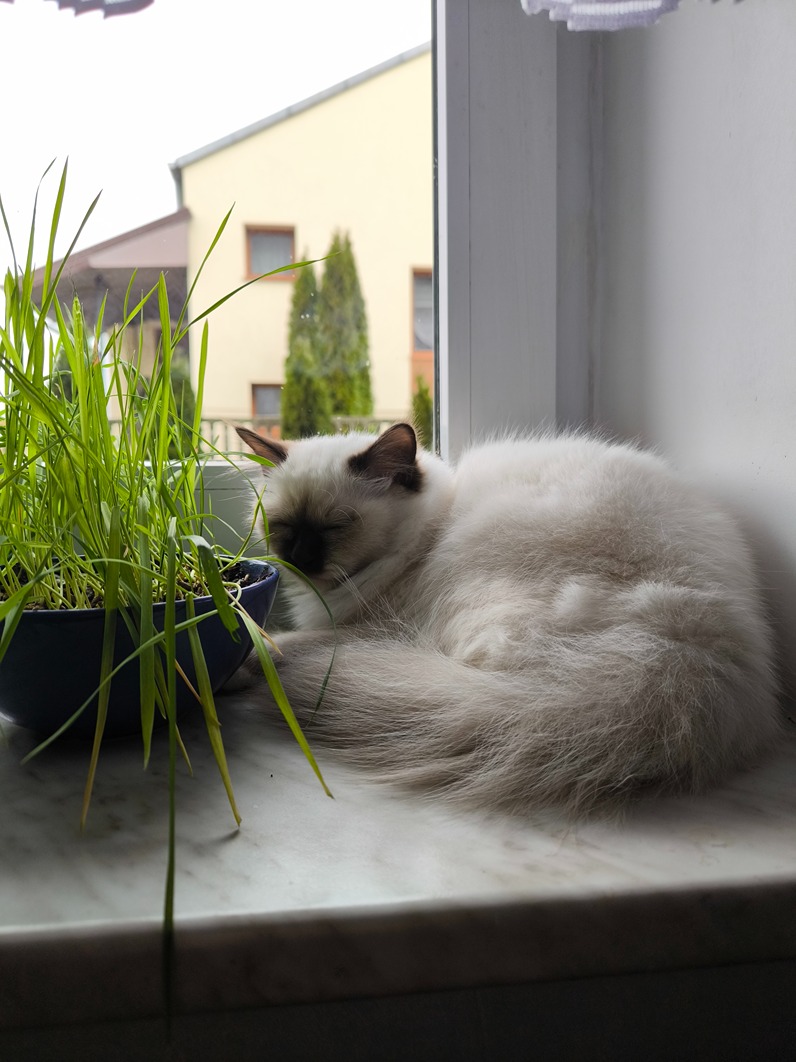
In many allergy sufferers, it causes milder reactions than other long-haired breeds. It has a silky coat without a dense undercoat and statistically lower production of the Fel d 1 protein.
4. Balinese
At first glance it looks like a long-haired cat, yet it is often recommended for allergy sufferers. It produces a smaller amount of allergens.
5. Devon Rex
It has a short, wavy coat and very little undercoat. Thanks to this, allergens are less likely to become airborne.
6. Sphynx
The lack of fur does not mean a lack of allergens, but they are easier to control through bathing and grooming.
Is the Sacred Birman a good breed for allergy sufferers?
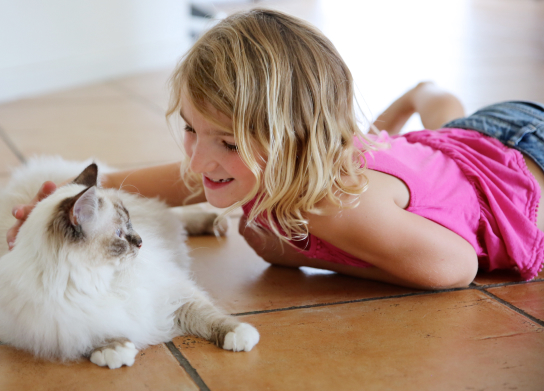
The Sacred Birman belongs to breeds that very often work well for people sensitive to allergens. Many owners with allergies report that contact with this breed is much more comfortable for them than with other cats of similar coat length. Of course, reactions depend on individual sensitivity, but Birmans very often turn out to be a pleasant surprise.
How do people sensitive to allergens react to Birmans?
Reactions vary, but in many cases they are noticeably milder than with breeds that have a dense undercoat. The silky fur of the Sacred Birman sheds minimally and rarely “fluffs up,” which limits allergens in the air. In practice, some allergy sufferers can spend many hours with a cat of this breed without symptoms, while others may need a short contact test at the cattery to see how their body reacts.
What distinguishes the Sacred Birman from typical breeds recommended for allergy sufferers?
Although the Birman looks like a classic long-haired cat, it does not have a dense undercoat, which in most breeds is responsible for shedding and the spread of dead hair. As a result, allergens are much less likely to become airborne, and it is easier to maintain hygiene in the home. Added to this is a calm temperament — cats of this breed react less often with stress and excessive grooming, and it is during grooming that the highest amount of the Fel d 1 protein ends up on the coat. As a result, contact with this breed is often much easier for allergy sufferers than one might expect based on the appearance of the fur alone.
How can you reduce allergy symptoms if you love cats?
Many allergy sufferers do not have to give up their dream of having a cat at all. It is enough to take care of a few simple solutions that reduce the level of Fel d 1 in the home. They are not difficult, they only require regularity.
Daily habits that genuinely reduce the amount of allergens in the home
Small actions help: frequent airing, washing beds and cat blankets, and washing hands after play. Setting up a cat-free zone also works well, ideally the bedroom. This way, the body has at least one calmer place where it can “rest” from allergens.
Daily vacuuming is also good support, especially if there are carpets or curtains in the home.
Do HEPA filters, frequent cleaning, and cat grooming really help?
Yes — and more than many people assume. HEPA filters capture allergen particles from the air. Frequent cleaning reduces the amount of Fel d 1 protein that settles on furniture. Cat grooming, especially brushing and wiping the coat with a damp cloth, helps limit the spread of dead hair.
It is a set of small actions that together genuinely improve quality of life.
Why does the choice of breeder matter for allergy sufferers?
Contact with a cat begins already at the breeder’s. That’s where you can check your body’s reaction, ask about grooming, and see what the environment in which the kitten grows up looks like.
Controlled conditions, cleanliness, and socialization — their impact on allergies
In a well-run cattery, cats grow up in an orderly environment. They are groomed regularly, with attention paid to hygiene and socialization. This reduces the animal’s stress, and the less stress there is, the less intensive grooming occurs and the smaller the amount of allergens on the coat.
Socialization also matters, because a calm, confident cat tolerates grooming procedures much more easily, which are essential for allergy sufferers.
What does a responsible cattery offer to people with allergies?
Above all, it offers the possibility of calm contact with the cat, sometimes even on multiple occasions. Breeders know their animals and can advise which ones are worth meeting. A good cattery also takes care of the cleanliness of the environment, which makes it easier to assess whether an allergic reaction results from contact with the cat or from allergens present in a given place.
If you are considering a Sacred Birman and want to calmly check your own reaction without pressure, it’s worth visiting the Gatti di Razza cattery. It’s a place where you can freely get to know the cats, ask all your questions, and see how you feel in their company. This is the best way to make an informed decision.
Summary — what should you keep in mind when choosing a cat as an allergy sufferer?
The most important thing is to check your own reaction. Each person responds differently to allergens, so it’s worth visiting the cattery and spending some time with the chosen breed. Many cats may prove to be friendlier than theory suggests.
FAQ — frequently asked questions about cats for allergy sufferers
Which cats work best for allergy sufferers?
The most commonly recommended breeds are Siberian, Balinese, Devon Rex, Neva Masquerade, and the Sacred Birman, which statistically produces fewer allergens and does not have a dense undercoat. The final reaction always depends on the individual’s body.
Which cat breed causes the least allergies?
There is no completely “non-allergenic” breed, but many people tolerate the Balinese, Siberian, and Sacred Birman best due to lower levels of the Fel d 1 protein and the lack of heavy shedding.
Is the Birman cat suitable for allergy sufferers?
Yes, very often they are. Birmans belong to breeds that many allergy sufferers tolerate much better thanks to their silky coat without a dense undercoat and lower allergen production. It is still worth doing a contact test, as reactions can vary.
Are there completely hypoallergenic cats?
No. Every cat produces the Fel d 1 protein responsible for allergies. “Allergy-friendly” breeds simply produce less of it or their coat transfers allergens less easily.
How can you reduce allergy symptoms if you already have a cat?
Regular cleaning helps, as does vacuuming with a HEPA-filter vacuum cleaner, frequent airing, brushing the coat, and limiting the cat’s presence in the bedroom.
Do short-haired cats cause fewer allergies than long-haired cats?
Not always. Coat length does not determine allergies. What matters is the amount of allergens in the saliva and skin, as well as the structure of the coat. An example? The Sacred Birman has a longer coat, but the lack of an undercoat means that allergens become airborne much less often.
Can you “desensitize” yourself to a cat?
It does happen that the body reacts less strongly over time, but this is an individual and unpredictable process. One cannot assume that desensitization will occur in everyone.