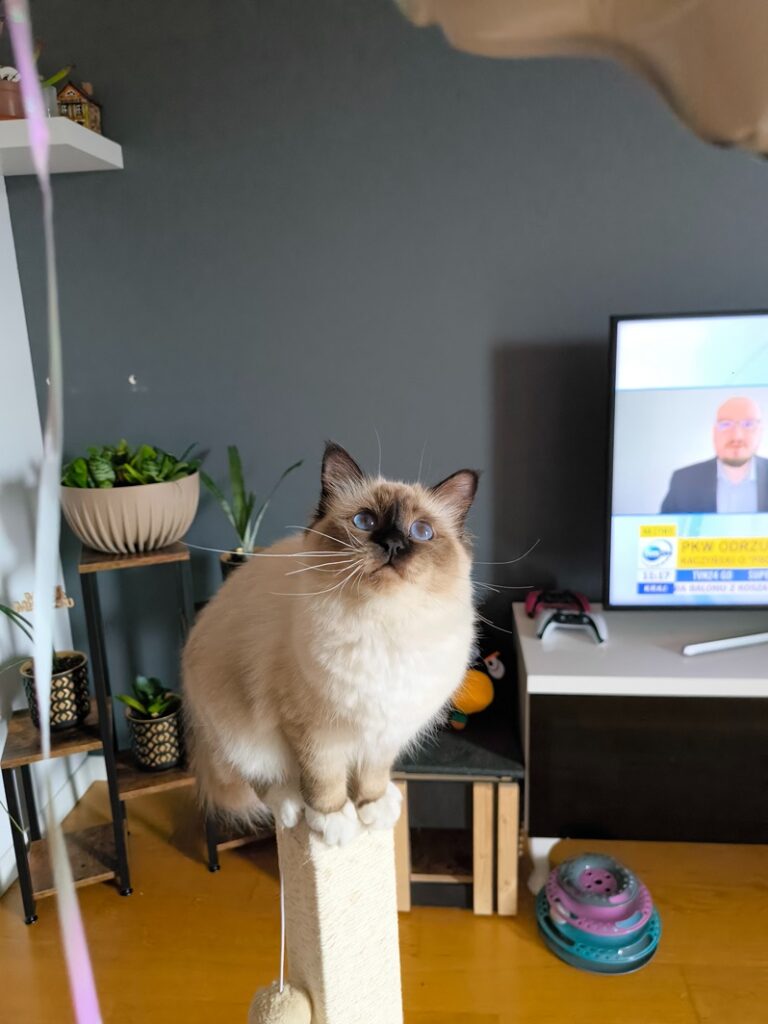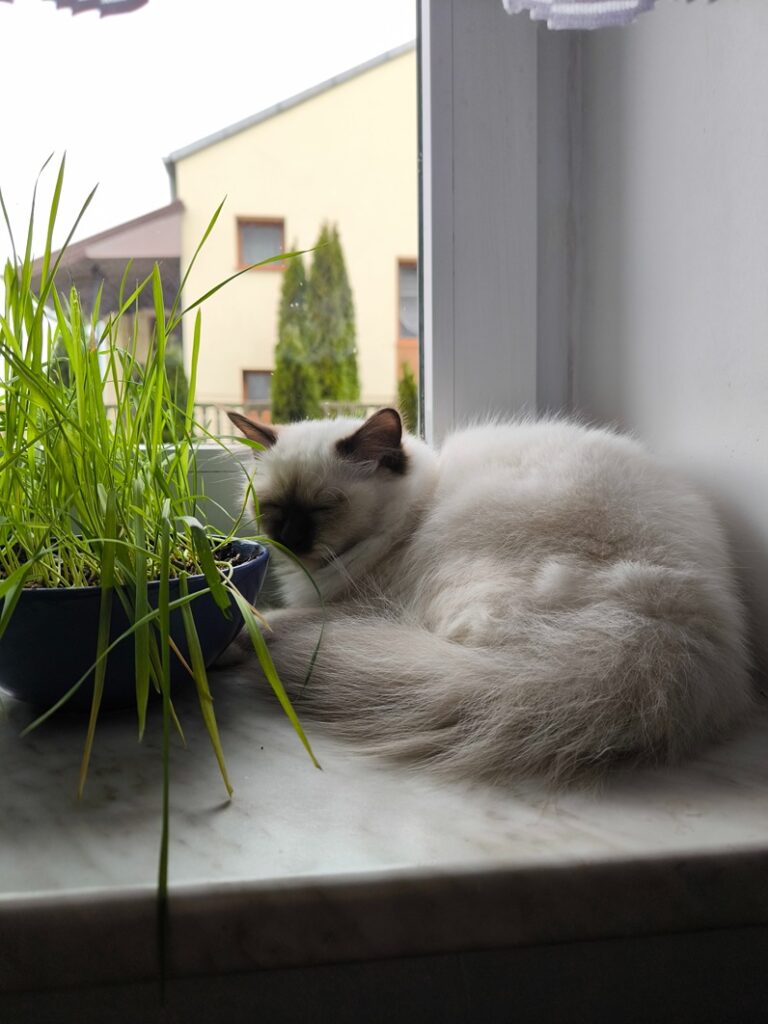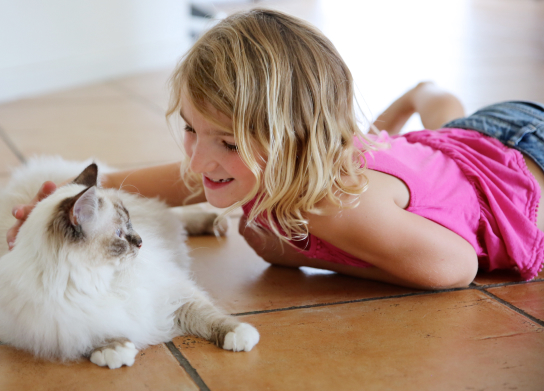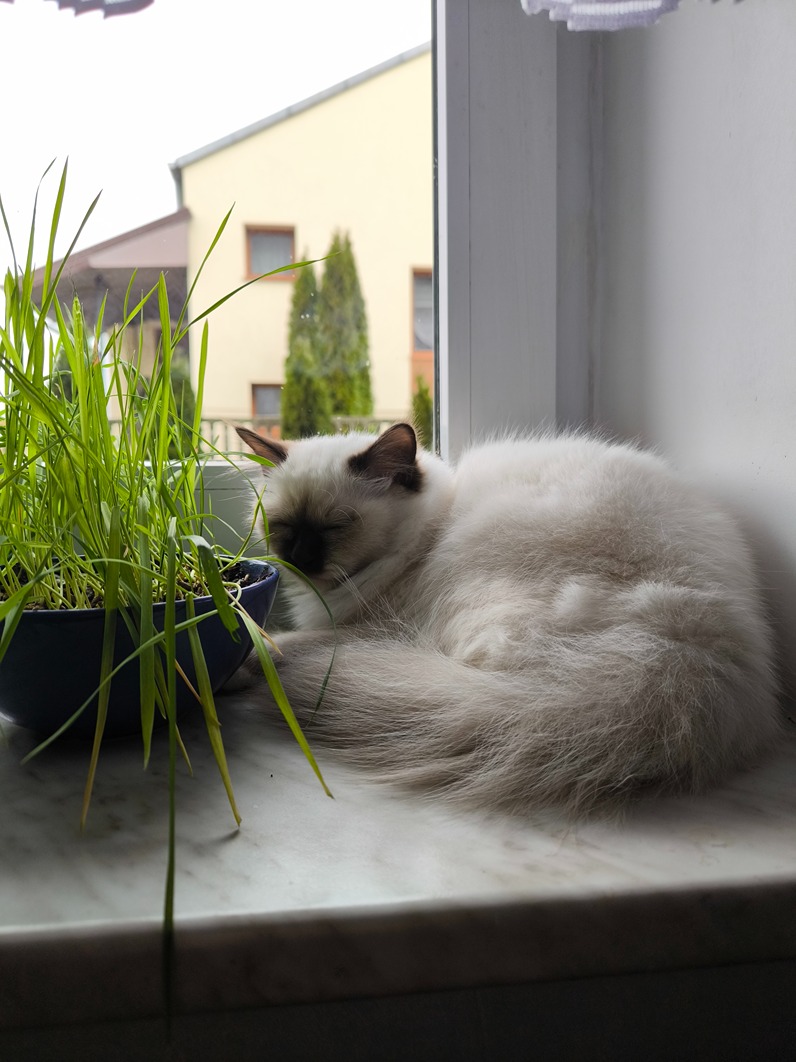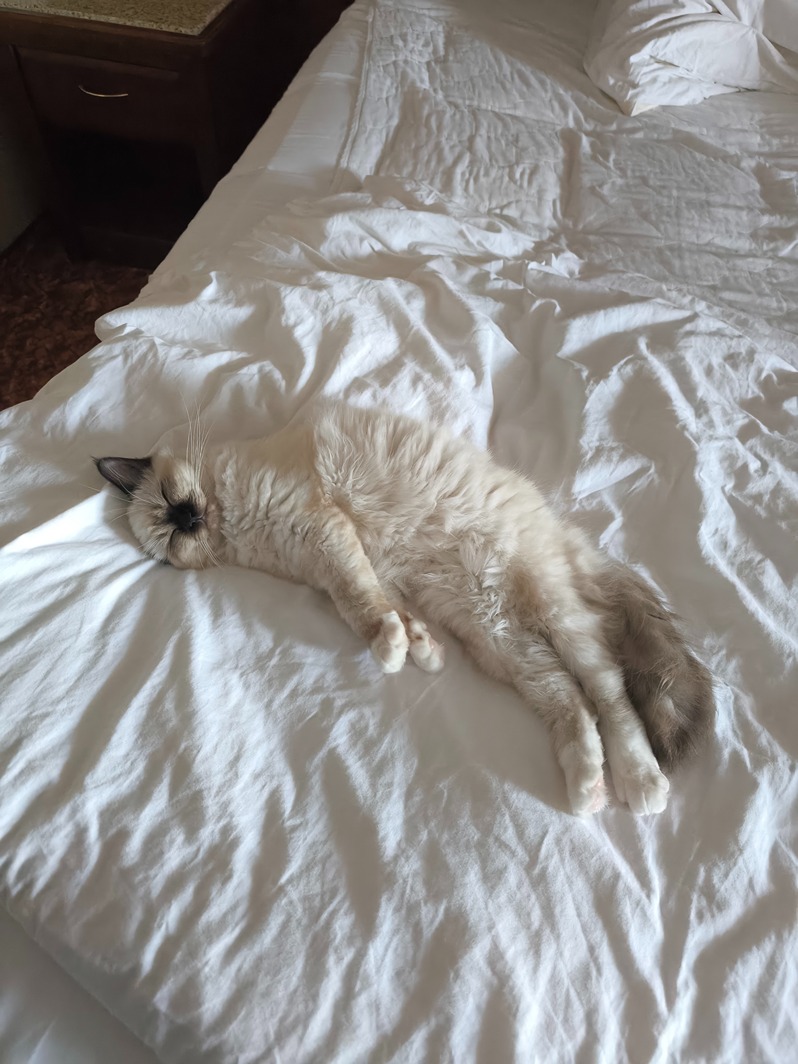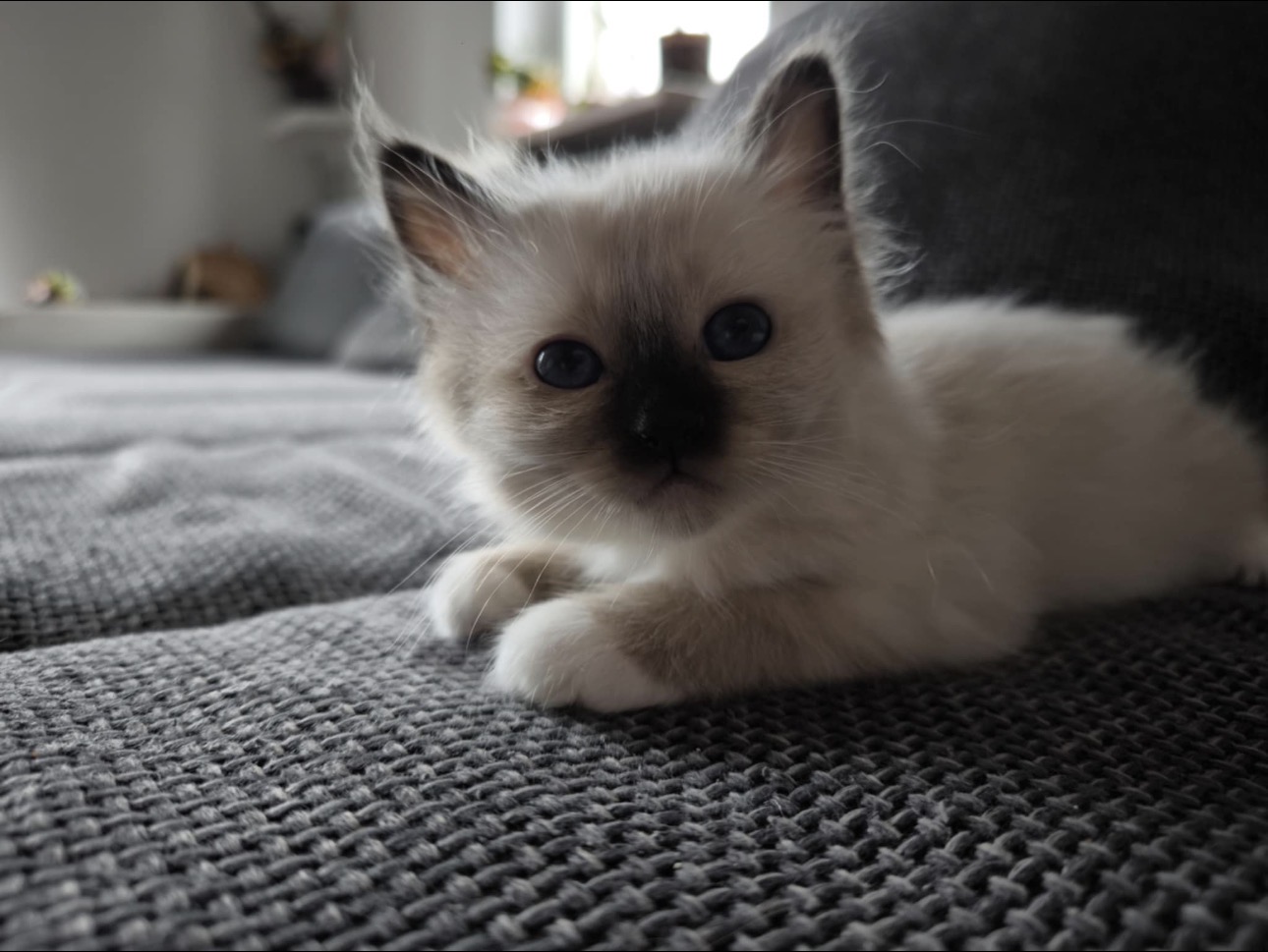
Choosing a cat for a child is a moment when parents often have more questions than they initially expected. Which cat breed is the gentlest for children? Which cat will fit into the everyday household bustle while also becoming a safe play companion? At this point, the Sacred Birman often catches the attention of many families, known for its surprising patience and calm approach to little ones — and not without reason.
What you should know before choosing a cat for a child
Choosing the first cat for a child is a decision that will affect the daily life of the entire family. It’s worth approaching it calmly and with an open mind, because questions about which cat breed is best for a child arise almost every time — and it’s no wonder. Each breed has a slightly different temperament, energy level, and way of responding to stimuli, which can make a huge difference in a home with a young child.
Before deciding which cat will be best for a small child, it’s worth looking at a few basic principles for choosing a breed.
Is every breed suitable for a home with children?
Not every breed. And it’s not that any breed is “bad.” Some cats simply prefer calm. They may be more skittish, react quickly with stress, or not enjoy being touched in a way that a small child often cannot moderate. In such cases, misunderstandings can easily occur, and in extreme situations, both sides may have unpleasant experiences.
There are breeds that naturally have more patience and handle the daily energy of children better. These are the breeds that parents most often consider when asking which cat breed is safest and friendliest for children in everyday life. It’s important to consider not just appearance, but above all, a stable temperament.
How to assess which cat is good for a child — traits that matter
When considering which cat breed to choose for a child, pay attention to a few traits that can make a huge difference in practice:
1. Calm temperament
A cat that doesn’t panic at loud noises and doesn’t react impulsively will be much safer for a child.
2. Sociability
Some cats actively seek contact. They sit nearby, join in play, or lie close. This is a huge advantage in a home where a young child is just beginning to learn about animals.
3. Gentleness in behavior
Some breeds have a natural gentleness. Their movements are soft, and their reactions restrained. This greatly reduces the likelihood of situations in which the cat uses its claws.
4. Patience
Yes, cats can be patient — sometimes very much so. An ideal cat for a child is one that doesn’t get annoyed easily and can withdraw when it’s had enough.
5. Predictable temperament
Cats from well-managed catteries have a stable character, which is a huge advantage for families. The child knows what to expect, and the cat is not stressed.
It is precisely this combination of traits that has led some breeds to be recognized for years as among the most family-friendly.
Why is the Sacred Birman an ideal cat for a small child?
Birmans have long been regarded as one of the most family-friendly and balanced breeds. Their calm temperament pairs well with a child’s energy, and at the same time, they don’t require parents to have special skills or preparations. That’s why, when someone asks which cat breed is best for a child, the Sacred Birman often comes up first — and it’s no coincidence.
It is a cat that naturally likes people. It stays close without being intrusive. It enjoys play but doesn’t go wild endlessly. It is affectionate without being exhausting. This very balance is what makes it adapt surprisingly well in a home with children.
Attachment to people — a cat that truly enjoys contact
Many owners say that the Sacred Birman behaves like the perfect family friend. It initiates contact on its own, sits where the action is, and treats children with surprising gentleness. Unlike more independent breeds, it happily participates in play, even if it’s just rolling a ball.
This is a cat that often chooses human company over solitude. It is not intrusive, but it seeks closeness, and for a child, such constant presence can be very important. It builds a sense of security and teaches gentle handling of a pet.
Affection and gentleness — why Birmans rarely react aggressively
This breed rarely reacts aggressively because stress does not trigger an immediate defensive response. The Sacred Birman usually withdraws first, then looks for a calmer spot, and only at the end shows displeasure. This makes it one of the safest choices when parents are wondering which cat will be best for a child.
How to prepare your home for your child’s first cat?
The first days with a cat lay the foundation for the entire relationship. Sacred Birmans are gentle, but even the calmest cat needs time to get used to a new environment. Here are some simple steps to help this stage go smoothly:
- Let the cat come out when it’s ready
Make it a space without toys within the child’s reach. A bed, litter box, food bowls, and a hiding spot are enough. The cat will feel this is its safe base.
- Let the cat come out when it’s ready
Birmans usually approach people with curiosity quickly, but it’s better for the cat to take the first step.
- Introduce the child and cat briefly
Young children often want to hug, pet, and ask about everything immediately. Arrange short meetings, then let the cat return to its own space.
- Routine works wonders
Regular feeding and play times help the cat know what to expect. The child also engages more easily in these rituals.
When the introduction goes calmly, the rest of the adaptation becomes straightforward.
How to teach a child to handle a cat properly?
This is one of the most important lessons for a family. Children often have good intentions but don’t always sense boundaries. That’s why, during the first weeks, it’s helpful to demonstrate through examples what is allowed and what is not.
A few rules are particularly effective:
- Do not pick up the cat without asking an adult. Small children may not sense the weight of the animal and could accidentally hurt it.
- Pet only in areas that the cat clearly accepts. Birmans usually enjoy being stroked on the cheeks and neck.
- When the cat walks away, give it space. This is its way of saying “enough.”
- Teach the child to observe the cat’s signals. If the tail moves quickly or the ears go back, it’s best to leave the cat alone.
These are small things, but they make the child–cat relationship safe.
Why does the cattery matter when choosing a cat for a child?
In catteries, cats grow up in controlled conditions, have contact with humans from the first days, and their behavior is closely observed. This ensures that the kitten enters a new home with basic socialization already established.
A cat from a random source may have an unpredictable character. Often, it is unknown what experiences it had during the first weeks of life, which are crucial for how the cat later handles children, noise, and everyday situations. For a family wanting to know which cat is good for a child, certainty of origin is a very important factor.
Why does the Gatti di Razza cattery place such emphasis on kitten socialization?
At Gatti di Razza, kittens grow up in a home environment where they hear the natural sounds of daily life, feel the presence of people, and learn to respond to new situations without fear. This kind of socialization ensures that Sacred Birmans from this cattery are confident, calm, and eager to interact with children.
Breeders devote a lot of attention to the kittens. It’s not a quick “raising” of a litter, but work in which every stage of development matters. This ensures that a family wondering which cat breed to choose for a child receives a pet prepared for life in a home full of interaction and emotions.
FAQ – frequently asked questions about choosing a cat for a child
Which cat breed is the gentlest for children?
The Sacred Birman is considered one of the gentlest breeds. It has a calm temperament, great patience, and natural gentleness when interacting with children.
Is the Sacred Birman suitable for a small child?
Yes. Birmans are exceptionally calm, happily accompany children, and rarely react impulsively. They handle the energy of young children well and can withdraw when they’ve had enough, rather than responding aggressively.
Is the Sacred Birman suitable for children with allergies?
Birmans shed a moderate amount of fur, usually less than many long-haired breeds. However, they are not a hypoallergenic breed. People with allergies should visit the cattery and test their reaction before making a decision. More information can be found here: Which cats are suitable for allergy sufferers? Is the Sacred Birman a good choice for sensitive owners?
Which cat is the most family-friendly and patient?
The Sacred Birman is one of the most family-oriented breeds. It combines a calm temperament with a strong need for human contact, making it a patient companion for both children and adults.